
The Open University: Disabled Student Commitment (DSC) Action Plan
What is the Disabled Student Commitment?
The Disabled Student Commitment (DSC) is a shared pledge by universities and colleges across the UK to improve the experiences of disabled students. By signing the commitment, we show that we are committed to removing barriers and creating a more inclusive learning environment.
It sets out clear expectations for how higher education providers should support disabled students. This includes making sure that online learning platforms, materials and services are accessible, and that students receive the adjustments they need to succeed.
As a university that has signed the commitment, we are working to embed these principles in everything we do so that all our students feel supported and can reach their full potential.
Introduction
The DSC is a UK-wide approach established by the Disabled Students’ Commission in 2020, based on research and feedback from disabled students. The Commitment focuses on addressing the issues that create barriers to disabled student success across the student journey, to improve their experience within higher education.
The Disabled Student Commitment was published for the first time in 2023 and is available to download from the Advance HE website.
Accessibility lies at the heart of our OU mission and values and is the key to enabling success for our disabled and neurodivergent students. The OU is the largest UK provider of higher education for disabled and neurodivergent people, with over 39,000 students who shared a disability with us in 2025. The experiences of these students and their adjustment needs must be explicitly recognised to ensure equitable learning, progression and outcomes can be consistently delivered.
The OU has a well-earned reputation as a sector leader in this field, and many current initiatives with and for our disabled students contribute to this successful work. However, we realise there is still work to do. Using the DSC, we can identify the steps we need to take to address any gaps between what we’re doing and what we need to do to improve the experience for our disabled and neurodivergent students.
The commitment is established around 5 ‘touch points’ of the higher education journey:
- Requests to share information
- Choosing a course of study
- Transition into the higher education community
- On-course experience
- Moving forward
In our action plan, we’ve outlined the touch points of the higher education journey, shared ‘what we’re already doing’ in relation to these areas and then detailed ‘what we need to do next’ to address any gaps. We’ve mapped the items in our action plan to the numbered commitments in the DSC.
We realise that as a large distance learning provider, the OU model has a unique position in that we need to emphasise the importance of reducing barriers in online learning environments and promoting good digital accessibility.
How we’ve developed our OU Disabled Student Commitment Action Plan
The OU DSC Action Plan is guided by the four priorities identified by disabled students through the Disabled Students Commission: communication, consistency, certainty and choice.
Our action plan has been written with input from OU staff working with disabled and neurodivergent students, as well as incorporating feedback from students from a direct consultation on our DSC plans.
We will continue to work in partnership with disabled students to review, prioritise and refine actions within this plan.
Next steps
The next stage of work on our OU DSC Action Plan is to determine how we will measure the success and progress of our plan so that we can demonstrate how we’re meeting our goals.
We will review progress against this plan annually and publish updates on actions completed, actions in progress and priorities for the following year.
We will work to ensure that the OU DCS Action Plan aligns with our upcoming University Strategy 2027-2032, our Equality, Diversity and Inclusion Strategic Plan 2026-2031. We will also embed the actions from the plan into accessibility initiatives across the institution which meet the needs of our disabled staff and students.
The OU DSC Action Plan
Touch points
1. Requests to share information
Why it matters
The sharing or disclosure of information is a key touch point for students. It is important that this is viewed as a positive step as part of the student experience. The DSC recognises that Higher Education Providers (HEPs) and other providers have a range of record systems, but often the systems do not work together, resulting in repeated requests for information. The disabled student view is very clear that they find it frustrating, off-putting and disrespectful to be repeatedly asked to share the same information about their disability.
What we’re already doing
- We have a Student Privacy Notice which details ‘special categories’ of data and how this is shared with relevant departments to provide reasonable adjustments and other provisions for study. 3
- We’ve redesigned certain organisational processes around how we collect information about our disabled and neurodivergent students. 1, 2
- We have a dedicated Disability Support Team, who support students who choose to share their disability, be this via direct contact with the team, another member of university staff, or via filling in our Disability Forms. 4
What we need to do next
- Improve the way we capture information from students. Following consultation with students, we are looking at how we initially capture information (with advisors/AI) as we know that our processes sometimes don’t always follow through as intended. To support this, we’re making changes to our ways of working and training and developing staff. 1, 2, 4
- Improve the way we use student information to support students throughout their journey with us to make it a more cohesive, consistent and positive experience. 1, 2, 4
- Review and improve how we interact with students concerning their disability throughout their journey with us and the information we request, as well as make changes to the systems which support this process to reduce barriers students experience in providing information and requesting support. 2, 4
- Explore how tutors and student-facing staff access and use student information regarding disability. This includes improving current communication channels and the systems we use internally. 2, 4, 27
- Assess existing procedures around students consenting to sharing and use of their data. 3
2. Choosing a course of study
Why it matters

It is important that all applicants and students fully understand and engage with the nature of the course that they wish to study. However, it is even more crucial that a disabled student understands how the course will be delivered, and the support available to enable them to succeed, given the barriers they may face.
A range of organisations and service providers, not just those based in the higher education sector, have a responsibility to provide consistent Information, Advice and Guidance (IAG) on higher education, and they all need to ensure that disabled students are considered within this.
What we’re already doing
- As a distance learning provider, the OU is committed to ensuring that quality Information, Advice and Guidance on support for disabled students is available to current and prospective students. We already have well-established information and guidance available to prospective disabled students and applicants, and our existing disabled students, e.g. OU Help Centre, OU Accessibility Hub. 1, 11, and 12
What we need to do next
- Improve existing enrolment processes and information and guidance in this area. This includes testing those processes with disabled students. 11
- Ensure Information and Guidance about accessibility and disability support, such as module accessibility guides, information about Disabled Students’ Allowance (DSA), and OU disability support, is realistic and practical, as comprehensive as possible, made more visible to students, easy to use, and available prior to registration. 12
3. Transition into the higher education community
Why it matters
First experiences within a new community are crucial in enabling integration and establishing a sense of belonging. This is particularly the case for disabled students entering higher education for the first time. It is important that HEPs, student unions and guilds work collaboratively to support disabled students’ transition into higher education and to ensure that they can participate confidently in all activities. Often, disabled students face unintended barriers from the very beginning, simply because of institutional and sector body decision-making processes which may not have fully considered their needs.
What we’re already doing
- We provide OU Ready, an eLearning resource that helps students learn to navigate our online learning environment, understand who will support them, and what studying with The OU is like. 12, 18, 21
- New students are invited to have a 121 call with a member of student support regarding Preparation to Study. 19, 20
- We provide support to students using assistive technology in our OU digital environments. 21, *22
- Familiar tools to support transition: We provide accessibility features built into platforms such as Microsoft that many students are already familiar with. Using familiar tools helps students feel confident and makes the transition into higher education smoother, reducing the need to learn new systems at a time of change. *22
What we need to do next
- Continually review and update our student accessibility policy, reasonable adjustments policy, and mental health policy to ensure they reflect the needs and expectations of our disabled students, as well as help the OU to meet our legislative obligations. We also need to make sure they are consistent with the principles of the Office of the Independent Adjudicator for Higher Education (OIA)’s Good Practice Framework. 16, 17
- Continue to embed accessibility into student and staff facing policies and procedures. 16, 17
- Continue to actively work to ensure that support requirements are in place for students from day one of their course, including working to distribute printed packs in good time, and mitigate the effects of delayed Disabled Students Allowance. 19, 20, 21
- Promote accessibility and support for disabled students in existing and newly created induction materials. 21
- Improve visibility and promotion of support services and communities early on, to ensure positive initial interaction and understanding, (e.g. peer groups, ND café, student networks, Open SU Disabled Students Group). 21, 23
4. On-course experience
Why it matters
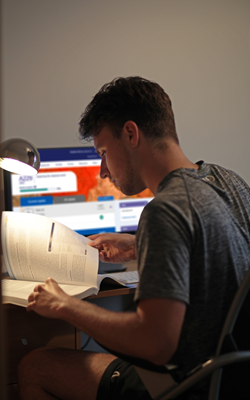
It is vital that we create a culture in which all students can excel in higher education. For disabled students to excel, their needs and support requirements should be met so that they can fully engage with their learning and achieve positive outcomes without unnecessary and stressful distraction.
What we’re already doing
- Embedded adjustments: Students continue to benefit from built-in accessibility features throughout their courses. These tools help them engage with learning materials, manage tasks effectively, and maintain independence in their studies. 25
- Prioritising the mental health and wellbeing of our students, which is a key priority of our OU-wide Learn and Live Strategy. 30
- Actively creating and maintaining a suite of training available for all staff with a range of disability topics, from best practices, condition-specific training, and disability culture specific training. 27
What we need to do next
- Actively work on an Urgent Cases Equality and Human Rights Commission (EHRC) process. We recognise that students can find themselves in situations where they need us to respond promptly to a change in circumstances as a result of their disability. The Urgent Cases process will be a mechanism where any member of staff can escalate cases across departments to resolve a situation. The aim of which is to provide an improved experience to the students. 27, 30
- Continue to actively work to improve the embedding of inclusive curriculum design and consistency of accessibility best practice for our students in terms of development and delivery of learning and assessment and embedded reasonable adjustments across all modules. 25
- Continue to embed inclusive assessment best practice into all new modules and those which are being reviewed. 25, 26
- Explore how tutors and student-facing staff access and use student information regarding disability. This includes providing appropriate and regular training and guidance for staff. 2, 4, 27
- Review and explore community building, wellbeing, and peer support opportunities which go beyond academic study to enhance the disabled student experience. 23
5. Moving forward
Why it matters
Moving out of studying and into employment is a crucial step for disabled students, and yet this is where the biggest gap in outcomes exists.
What we’re already doing
- The accessibility features built into platforms such as Microsoft not only support learning but also help students develop skills they can use in the workplace and other daily environments. By becoming familiar with these widely used tools during their studies, students are better equipped to apply them confidently after graduation and outside of study. 34, 36
What we need to do next
- Update resources so that they enable disabled students to reflect on and articulate the attributes and transferable skills they have developed. 34
- Proactively seek relationships with employers who provide opportunities which offer relevant support for those from a range of EDI groups including those declaring a disability. 36, 42
- Offer clearer guidance on career pathways and expectations, relevant and appropriate for disabled and neurodivergent students, including how study links to employment. 34, 36
- Enhance employability and transition support throughout the student journey, including mentoring opportunities, employer and alumni connections, and networking opportunities. 35, 36, 37
*22 relates to accessibility in the built environment and ensuring physical accessibility. We’ve changed the interpretation of this to suit our own online context.


Explore

Undergraduate
Postgraduate
Policy
-
Follow us on Social media
-


